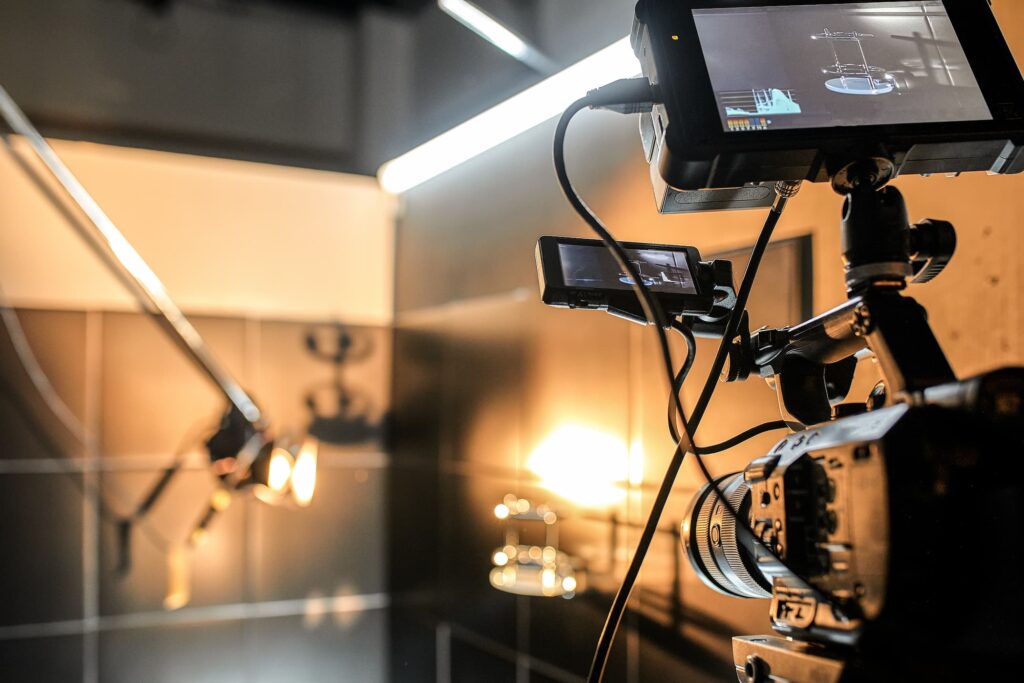
Does this sound familiar? The date is set, and the presentation is ready. But at the last minute, you realize you also need a livestream. What often starts with the reassuring assurance that you can get it done over the weekend frequently ends in stress, unnecessary costs, or technical problems.
A professional studio livestream requires more than just a few quick steps. It requires planning, experience, and the right technical setup.
In this article, we’ll show you what really matters when preparing a livestream and how you can avoid common mistakes.
What do we mean by lead time?
Lead time refers to the period between your initial inquiry to a studio and the actual broadcast date. This time is needed for planning, preparation, and technical tests.
A studio livestream is significantly more complex than a simple video recording made with a smartphone. Professional streaming studios use multiple cameras, specialized lighting, and high-quality audio equipment. All of these components must be perfectly coordinated.
The lead time consists of several phases: from the initial consultation through concept development to technical implementation and final testing. Each phase requires sufficient time to ensure optimal results.
The appropriate lead time depends on the complexity
The lead time required for a studio livestream varies greatly depending on the type and scope of your production. It makes a significant difference whether you are planning a simple internal livestream or a large-scale public event.
For simple productions with well-coordinated teams and existing technical infrastructure, one to three days may be sufficient. This applies, for example, to regular internal updates or standardized webinars where all procedures are already familiar.
However, for professional productions with higher quality standards, experienced livestream service providers recommend a lead time of one to three weeks. This timeframe minimizes risks, ensures quality, and allows for smooth coordination among all parties involved.
The lead time is primarily determined by three factors: the technical complexity of your livestream, the availability of the desired streaming studio, and the scope of content preparation.
Why More Time Means Better Results
The more lead time you allow for your studio livestream, the better the final result will be. This rule applies virtually without exception.
With enough time, you can try out different options and find the best setup for your needs. You’ll have the opportunity to do several rehearsals and refine your content. This significantly reduces stress, which has a positive effect on your performance in front of the camera.
More lead time also means more flexibility in the event of unforeseen problems. If technical difficulties arise or changes to the content become necessary, you’ll have enough leeway to respond.
In addition, you can often negotiate better terms if you plan well in advance. Streaming studios frequently offer discounts for bookings made far enough in advance, while last-minute bookings often come with rush surcharges.
How to Make Your Livestream a Huge Success
Good livestreams don’t happen by chance. They are the result of careful planning, professional execution, and realistic timelines. The sooner you start preparing, the greater the chance of a successful outcome—technically, in terms of content, and organizationally. Adequate lead time reduces stress, improves quality, and, in the best-case scenario, even saves costs.
Whether it’s an internal company status report, a product presentation, or an event broadcast: By planning ahead, you lay the groundwork for a smooth process and a professional presentation to your audience.
Are you planning a livestream? Then get in touch with us!
Livestream Studio Munich supports you from the initial idea through to the final broadcast with its experience, technology, and a well-coordinated team.
Request a consultation now and let’s go live together professionally: www.livestream-studio.com